I kept saying 'I’ll start my hobby this weekend' — this tool finally made it happen
How many times have you whispered to yourself, “This weekend, I’ll finally start painting, learning guitar, or getting into photography”? I’ve said it too—standing in the kitchen with a cup of tea, staring at the corner where my dusty guitar leans against the wall. We all carry passions we love but never seem to find time for. Between school drop-offs, grocery runs, and answering work emails after dinner, our hobbies quietly slip away. But what if the same tools we use to manage remote work could help us reclaim them? I discovered that with just a few small shifts, productivity apps aren’t just for deadlines—they can actually fuel joy, too.
The Guilt of the Unlived Passion
There’s a quiet kind of guilt that lives inside so many of us—the one that shows up when we walk past the piano we used to play, or open a drawer full of half-finished knitting projects. It’s not loud or dramatic. It’s softer, more persistent: a whisper that says, “You meant to do this. You wanted to.” I remember last winter, flipping through an old journal and finding a note from five years ago: “Start watercolor class this spring.” Five years. Five springs. And still, no paintbrush touched paper.
We tell ourselves we’re too busy. And yes, life is full. Kids need help with homework. Dinners need to be made. Work deadlines don’t wait. But here’s what I’ve realized: it’s not just about time. It’s about how we treat our hobbies in our minds. We’ve conditioned ourselves to see them as luxuries—something we earn after everything else is done. But when everything else never ends, that “me-time” keeps getting pushed forward. “I’ll start next week,” we say. “Once things calm down.” But things never really calm down, do they?
And here’s the irony: remote work was supposed to give us more flexibility. Instead, for many of us, it blurred the lines so much that personal time disappeared into the cracks. The laptop stays open. The to-do list grows. And the sketchbook? Still unopened. The truth is, we’re not lazy. We’re just using the wrong tools. We schedule meetings, doctor appointments, even grocery pickups—but we don’t schedule the things that bring us joy. And when something isn’t scheduled, it rarely happens.
When Work Tools Become Life Tools
I used to think of my calendar as a work-only zone. Meetings here. Project deadlines there. A few personal notes squeezed in at the edges. But one day, I had a thought: what if I treated my hobbies with the same respect I give to work tasks? What if I didn’t just “hope” to paint—but actually blocked time for it, like a non-negotiable meeting?
So I tried it. I opened Google Calendar and created a recurring event: “Watercolor Hour—Saturdays at 10 a.m.” I gave it a soft blue color, different from my work blocks. I even added a little icon—a paintbrush. At first, it felt silly. “Who schedules fun?” I thought. But then Saturday came. The alarm popped up. And something shifted. Because now, it wasn’t just a wish. It was on the calendar. And when something’s on the calendar, it feels real.
This is where remote work tools shine. We already use apps like Trello, Notion, or Todoist to manage projects and stay on track. But these tools aren’t just for spreadsheets and client calls. They can be repurposed for the things that matter to us personally. The key is mindset. When we stop seeing hobbies as “extra” and start treating them as essential parts of our well-being, the tools we already use become bridges to joy.
Think about it: if you wouldn’t skip a team meeting because you “didn’t feel like it,” why skip your guitar practice? The same logic applies. By using familiar tools to schedule personal time, we create structure around our passions. And structure doesn’t kill spontaneity—it protects it. It makes space for it to grow.
The Power of Tiny, Scheduled Joys
One of the biggest reasons we give up on hobbies is that we aim too big. We say, “I’m going to learn the guitar,” and then imagine ourselves playing full songs in front of friends. But that kind of goal can feel overwhelming. The gap between where we are and where we want to be feels too wide. So we delay. We wait for the “perfect time.” And that time never comes.
What changed for me was thinking smaller. Much smaller. Instead of “learn guitar,” I started with “play three chords for five minutes after lunch.” That felt doable. And because it was small, I actually did it. The next day, I did it again. And the next. No pressure. No performance. Just a tiny moment of joy, built into my day.
This is where micro-scheduling comes in. Using my calendar, I started blocking 10- to 15-minute slots for little acts of creativity. “Journal for 10 minutes—Tuesday at 3 p.m.” “Strum ukulele—Thursday after school pickup.” These weren’t grand plans. They were tiny promises to myself. And because they were scheduled, they felt important. The app didn’t push me aggressively. It just reminded me gently, like a friend saying, “Hey, don’t forget what you love.”
There’s science behind this, too. Research shows that small, consistent actions build habits faster than occasional big efforts. And when we use tools we already trust—like our calendar or task manager—we reduce the mental effort it takes to start. We don’t have to decide when or how. We just show up. Over time, those tiny moments add up. Five minutes of guitar turns into ten. Then twenty. Then a full song. And suddenly, you’re not just “trying” to play music—you’re actually doing it.
Creating Your Hobby Dashboard
Have you ever opened a notebook to start a new project, only to feel overwhelmed by blank pages? That’s how I felt when I first tried to organize my baking hobby. I had recipes saved in five different places—emails, screenshots, a physical notebook, even sticky notes on the fridge. Nothing felt connected. It was chaos.
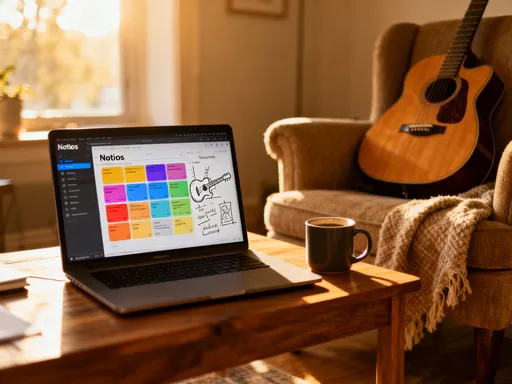
Then I thought: what if my hobby had its own project board? Like the ones I use for work, but for me? I opened Notion and created a simple dashboard just for baking. I added a section for sourdough starters, one for cake recipes, and a checklist for my weekly baking goals. I pinned photos of beautiful loaves I wanted to try. I even added a “progress log” where I could write notes after each bake.
Suddenly, my hobby felt real. It wasn’t just a vague idea anymore. It had structure. It had a home. And every time I opened that page, I felt a little spark of motivation. Seeing my goals laid out visually made them feel achievable. Checking off a task—like “feed starter” or “bake rye loaf”—gave me a tiny win, the kind that keeps you going.
You don’t need to use Notion. You could use Asana, Trello, or even a simple Google Doc. The point is to give your hobby a digital space where it can live and grow. Add inspiration. Track progress. Celebrate small wins. When your passion exists in a place you visit regularly, it becomes harder to ignore. It’s no longer just a dream. It’s a project you’re building—one small step at a time.
Notifications That Nourish, Not Distract
We’ve all been there: it’s 8 p.m., you’re finally relaxing, and your phone buzzes with a work reminder. Your shoulders tense. Your mood shifts. We’ve been trained to dread notifications—they feel like demands, not invitations. But what if they didn’t have to be that way?
What if a notification said, “Time to feed your sourdough starter,” with a little bread emoji? Or “Your ukulele session starts in 10 minutes—get ready to play!”? That’s exactly what I started doing. I reprogrammed my reminders to support joy, not stress.
Using Todoist, I created a recurring task: “Evening journal—7:30 p.m.” with a soft chime as the alert. No urgency. No red flags. Just a gentle nudge. I did the same for my weekly painting time, my yoga stretch, even “call Mom.” These weren’t chores. They were acts of care. And the way I set them up made all the difference.
The tone matters. Instead of “Don’t forget guitar practice,” I wrote, “It’s time to make music!” Friendly. Encouraging. Like a note from a friend. And because I associated these alerts with positive feelings, I started looking forward to them. The tech wasn’t controlling me—it was caring for me. It became a quiet companion in my day, reminding me to pause, breathe, and do something that lights me up.
This small shift changed how I relate to my devices. Instead of feeling drained by pings and alerts, I began to see them as tools for nourishment. When your phone reminds you to water your plants or try a new recipe, it’s not stealing your time—it’s giving it back.
Sharing Progress Without the Pressure
Social media can be a double-edged sword when it comes to hobbies. On one hand, it’s inspiring to see others create. On the other, it’s easy to fall into comparison. You post your first watercolor attempt, and someone else shares a masterpiece. Suddenly, your joy feels small. Your progress feels slow. And you wonder, “Why am I even doing this?”
That’s why I stopped sharing my hobby progress online. Instead, I started sharing it privately—with people who care about me, not my content. I created a shared folder with my sister where we exchange photos of our latest baking experiments. No captions. No likes. Just real, messy, imperfect loaves.
I also started sending voice memos to my husband after my guitar practice. “Here’s what I learned today,” I’d say, playing a short clip. He’d respond with, “That sounded great! The second chord was clean.” No pressure. No audience. Just love and encouragement. It kept me going on days when I wanted to quit.
Even Slack, which I use for work, became a personal tool. I created a private channel just for me and my best friend. We don’t talk about work there. We share hobby wins: “I finished my first short story!” or “My sourdough rose perfectly today!” It’s not about performance. It’s about connection. And that kind of accountability—with love—makes all the difference.
When you share your progress in safe, supportive spaces, you protect your joy. You keep the focus on growth, not validation. And that’s where real motivation comes from.
From Hobby to Habit: How Tools Help You Stay
The real victory isn’t starting a hobby. It’s sticking with it. Anyone can begin with excitement. But consistency? That’s where the magic happens. And I’ve learned that simple tech tools—ones we already use every day—can be the quiet force that keeps us going.
It’s not about fancy apps or complicated systems. It’s about using what you have to honor what matters. When you schedule your hobby like a meeting, track progress on a dashboard, and let gentle reminders guide you, you’re not just organizing your time. You’re sending a message to yourself: “This matters. You matter.”
And over time, something beautiful happens. The hobby stops feeling like an obligation or a guilty secret. It becomes part of your rhythm. You don’t “find time” for it—you make space for it, because it feeds your soul. You start to see yourself differently. Not as someone who “wants to paint,” but as someone who paints. Not someone who “should learn guitar,” but someone who does.
And that shift changes everything. It’s not just about skill growth. It’s about identity. When your tools serve both work and wonder, you don’t just get things done—you become more *you*. You carry yourself differently. You feel more alive. You remember that life isn’t just about checking boxes. It’s about moments of joy, creativity, and connection.
So if you’ve been saying, “I’ll start my hobby this weekend,” try this: open your calendar. Block 15 minutes. Name it something that makes you smile. Let the reminder chime. Pick up the pen, the instrument, the camera. And when you do, know this—you’re not just making art. You’re reclaiming a part of yourself that’s been waiting all along.